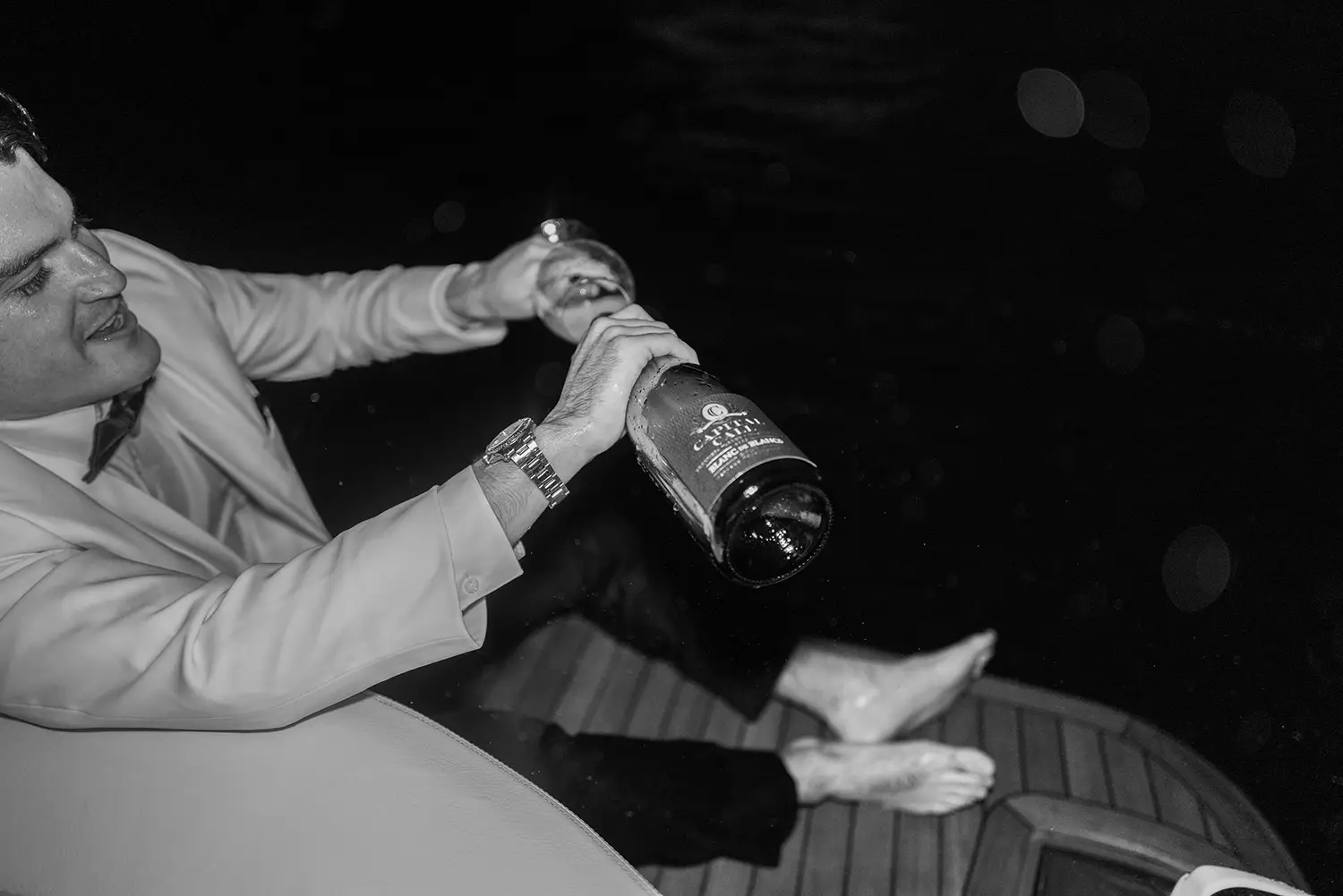
sparkling wine for anytime
Winemaker Josh Maloney and Capital Call Vintners co-founder Steve Bruere were in conversation about wine, as they often are, when Steve asked, “What would it take to add sparkling to our line up?”
Josh was game to find out. He had made his first bottles of sparkling wine back in the 1990s when he was a young winemaker in the Finger Lakes region of upstate New York. The climate in Washington state was completely different. Steve and Josh wanted to produce the Capital Call sparkling in the Traditional Method which meant Josh was going to need some assistance.
why it’s not called champagne
A note before we go any further: Why don’t we call our wine Champagne? Because we legally can’t. The only wine that can claim the moniker “Champagne” is sparkling wine made in the Traditional Method and produced within the Champagne region in France. The French are very firm about this.
There are several ways to make sparkling wine, but the Traditional Method is, well, the most traditional and time-intensive. It also requires a completely different set of equipment than does still (AKA regular) wine—which is why Josh contacted colleagues at Four Feathers Wine Services, a custom winery in Prosser with the right skills and equipment to get Capital Call set up to produce our own line of sparkling wine.
the traditional method: crafting sparkling wine
Sparkling wine made in the Traditional Method has three time-consuming steps: tirage, riddle, and disgorge. There are other ways to make sparkling wine that are faster and easier, but don’t allow for the same level of craft and control.
“Sparkling wine and still wine are like classical and jazz,” Josh said. “Jazz is about feel and improv, reacting to what’s happening around you. You can do this with still wine. But sparkling is precise, like classical. Sparkling is about technique; you must respect the tradition.”
For Capital Call’s first release, Josh worked with the Four Feathers sparkling team to choose a 100% Chardonnay base wine that was already in bottle and had received the liqueur de tirage, a mix of yeast and sugar. When these bottles had been aged for 12 months and gradually rotated so the yeast slid into the neck of the bottle (this is the riddling), Josh met Steve and Nikki and some of their friends at the facility to decide on the dosage. The dosage (dough-SAUGE), explained Josh “is that last bit of sweetness, the final adjustment to be made.”
The team disgorged (removed) the yeast plug, and the Capital Call folks decided on the level of sweetness (dosage) needed to make a brut wine (brut means a dry wine with less than 12 grams per liter of residual sugar. Our sparkling has 8 g/l.).
inside the blanc de blancs: flavor & style
The first release of Capital Call Blanc de Blancs (French for “white wine from white grapes”) has proven to be a favorite in our tasting rooms. “We used Chardonnay from Columbia Valley,” Josh said. “It’s got lots of bright fruit: green apple, hints of pear, and crème brûlèe. It’s a clean, fruit-driven sparkling wine.”
Planning ahead, Josh designed the 2024 vintage which will bottle in late June. He is planning two releases for this vintage, a 12-month release and a 24-month extended tirage release.
looking ahead: future sparkling releases
What does the future hold for sparkling wine at Capital Call? “One of the fun things is to think about how we can use other varietals,” Josh said. “We’re not constrained by Champagne rules.” In France, Champagne can only be made from three grapes: Chardonnay, Pinot Noir, and Pinot Meunier.
“We’re considering adding a sparkling Chenin Blanc from grapes grown at Windhorse Vineyard,” Josh said, adding, “The fruit, however, won’t be ready until 2026, so the wine wouldn’t be released until 2029.”
In the meantime, break out your flutes, coupes, insulated tumblers, or, heck, jelly jars. “Sparkling has a high hedonism factor,” Josh noted, “which is why it’s fun to drink any time you want to feel a little extra special.”